
Marcasite Jewelry inventory management for wholesalers
Marcasite Jewelry inventory management for wholesalers to optimize stock, cash flow, and fulfillment
Why inventory management is critical for wholesale success
Effective inventory management is the backbone of a profitable wholesale jewelry business. For marcasite jewelry, where SKUs can vary by design, size, and finish, poor inventory control leads to stockouts, overstock, and tied-up capital.
A structured system ensures you meet demand, maintain consistent supply, and protect margins. From an SEO perspective, inventory-focused content attracts business users seeking operational efficiency.

Setting up a clear SKU system
Create a standardized SKU structure that encodes product type, design, size, and finish. For example:
- MR-RG-VD-07-OX (Marcasite Ring, Vintage Design, Size 7, Oxidized)
Clear SKUs reduce picking errors, simplify reporting, and speed up order processing.
Demand forecasting and planning
Forecast demand using historical sales, seasonality, and trend data. Key inputs include:
- Best-selling designs and sizes
- Seasonal peaks (holidays, wedding season)
- Marketing campaigns and promotions
Accurate forecasting prevents stockouts and minimizes excess inventory.
Safety stock and reorder points
Define safety stock for fast-moving SKUs to buffer against demand spikes and supplier delays.
Set reorder points based on lead time and average daily sales:
Reorder Point = (Average Daily Sales × Lead Time) + Safety Stock
This ensures timely replenishment without over-ordering.
ABC analysis for inventory prioritization
Use ABC classification to focus on high-impact items:
- A items: high value / high demand (tight control)
- B items: moderate value / demand
- C items: low value / slow movers
Allocate resources and monitoring accordingly to maximize efficiency.
Managing variations (size, finish, design)
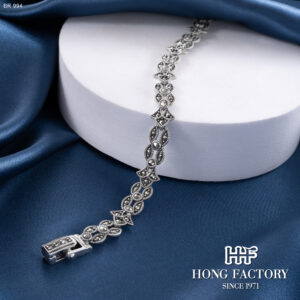
Marcasite jewelry often has multiple variants. Track each variant separately to avoid mismatches.
Use matrix inventory (style × size × finish) to visualize stock levels and identify gaps quickly.
Warehouse organization and bin locations
Organize storage with clear bin locations and labels. Group items by category and demand velocity.
Fast-moving SKUs should be placed in easily accessible areas to speed up picking and packing.
Cycle counting and stock audits
Implement regular cycle counts instead of infrequent full counts. Check A items more frequently.
Reconcile discrepancies quickly to maintain data accuracy and prevent shrinkage.
Handling slow-moving and dead stock
Identify slow movers and take action:
- Bundle with best-sellers
- Offer discounts or promotions
- Rework or repackage designs
Reducing dead stock frees up cash flow and storage space.
Supplier lead times and coordination
Track supplier lead times and reliability. Build reorder schedules aligned with production cycles.
Maintain backup suppliers for critical SKUs to reduce risk of disruption.
Integrating inventory with sales channels
Sync inventory across all channels (website, marketplaces, B2B orders) to prevent overselling.
Real-time updates improve customer experience and reduce cancellations.
Using inventory management software
Adopt software to automate tracking, forecasting, and reporting. Key features include:
- Real-time stock levels
- Low-stock alerts
- Purchase order management
- Sales analytics
Automation reduces manual errors and improves decision-making.

Packaging and kit management
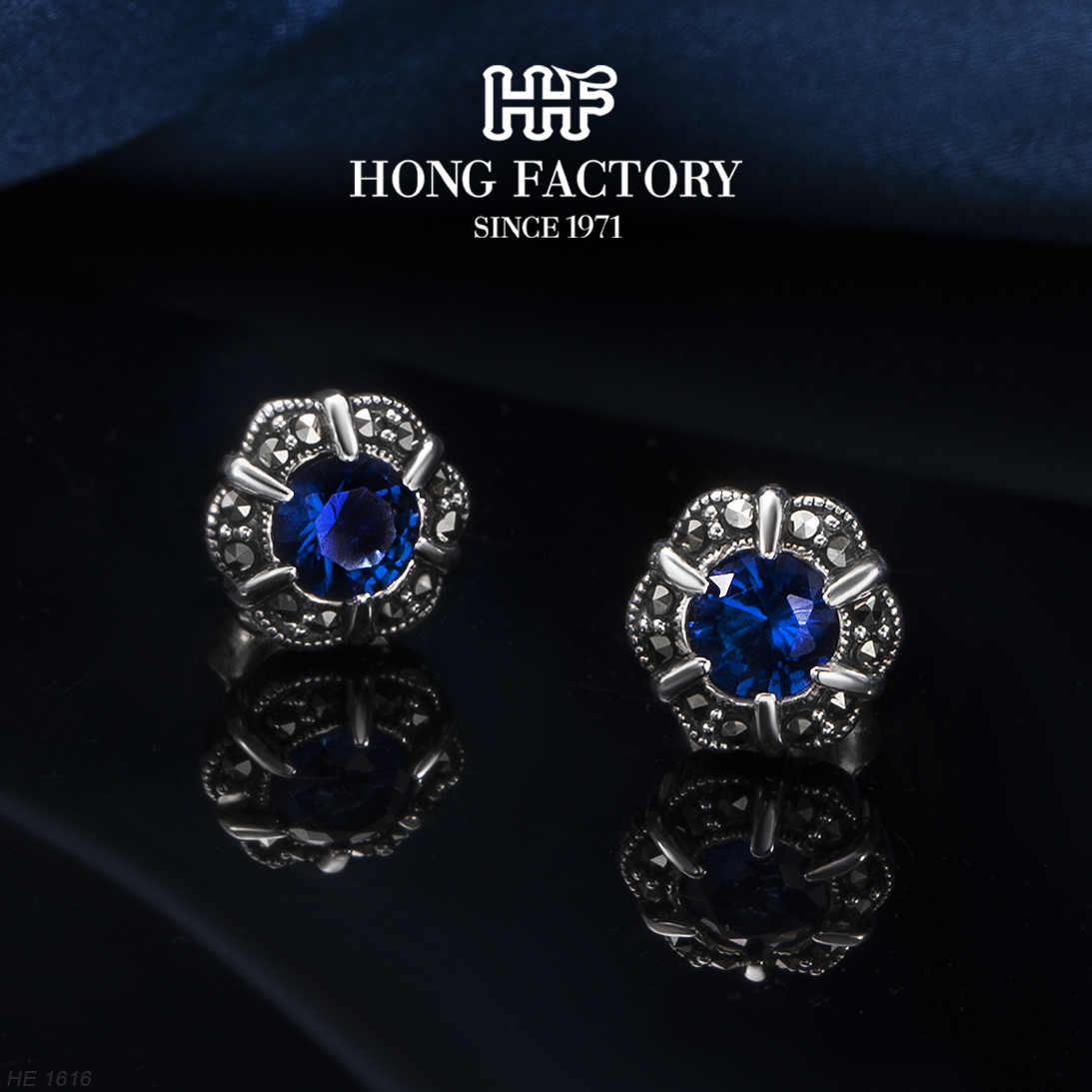
For sets and bundles, manage component-level inventory (e.g., earrings + pendant). Ensure availability of all parts before confirming orders.
Standardize packaging to speed fulfillment and maintain consistency.
Returns and restocking workflow
Define a clear process for returns inspection and restocking. Verify condition, update inventory, and segregate defective items.
Efficient handling reduces losses and keeps stock accurate.
KPIs to track inventory performance
Monitor key metrics:
- Inventory turnover rate
- Stockout rate
- Carrying cost
- Order fulfillment time
- Sell-through rate
These KPIs guide optimization and growth.

SEO strategy for inventory content
Target keywords like “inventory management for wholesalers,” “jewelry stock control,” and “marcasite jewelry inventory.” This attracts high-intent B2B traffic.
Detailed operational guides also build authority and backlinks.
Internal linking for operations and business topics
Link this article to sourcing, QC, export, and pricing guides. Strong internal links improve SEO and user navigation.
Content structure for readability
Use H1, H2, and H3 with bullet points and formulas for quick scanning. This improves UX and on-page performance.
Expanding keyword variations naturally
Include related terms such as “stock management,” “warehouse optimization,” and “demand planning” to enhance semantic SEO.

Conclusion
Efficient inventory management is essential for wholesale marcasite jewelry businesses. By implementing clear SKU systems, forecasting demand, optimizing stock levels, and leveraging software, you can improve cash flow, reduce errors, and scale operations.
For SEO and PBN strategies, inventory-focused content attracts high-value business users and supports long-term growth with actionable insights.
Marcasite Jewelry inventory management for wholesalers to optimize stock, cash flow, and fulfillment Why inventory management is critical for wholesale success Effective inventory management is the backbone of a profitable wholesale jewelry business. For marcasite jewelry, where SKUs can vary by design, size, and finish, poor inventory control leads to stockouts, overstock, and tied-up capital.…