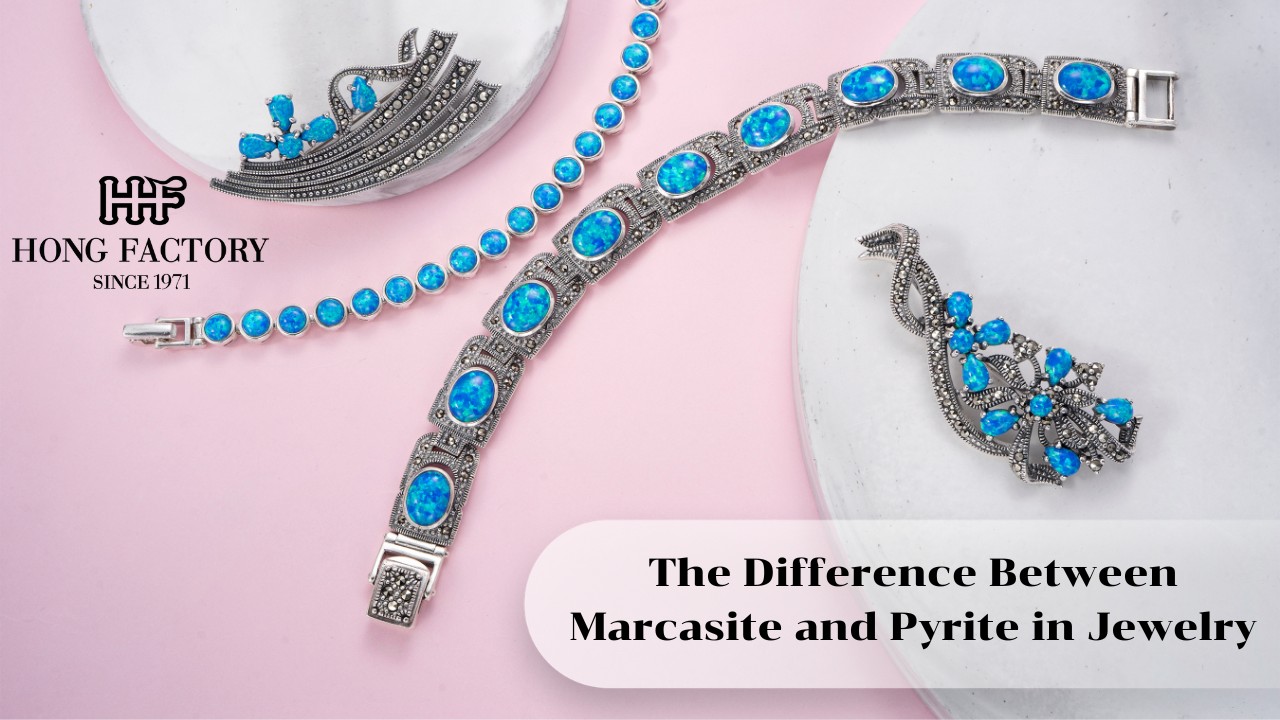
The Difference Between Marcasite and Pyrite in Jewelry
Many people encounter confusion when learning about marcasite jewelry because the term “marcasite” is often used differently in jewelry than in mineralogy. While marcasite jewelry is widely admired for its vintage elegance and craftsmanship, the stones used are almost always pyrite, not true marcasite mineral. Understanding the difference between marcasite and pyrite is essential for buyers, collectors, and anyone interested in jewelry authenticity. 925
This article explains the difference between marcasite and pyrite in jewelry, clarifying terminology, material properties, and why pyrite is the preferred choice for traditional marcasite jewelry.
Understanding the Terminology
The confusion begins with naming.
Marcasite in Mineralogy
In mineral science, marcasite is a naturally occurring iron sulfide with a crystal structure different from pyrite. True marcasite is:
- Brittle
- Chemically unstable
- Prone to cracking and deterioration
Because of these properties, natural marcasite mineral is unsuitable for jewelry use.
Marcasite in Jewelry Context
In jewelry, the term “marcasite” refers to a style of jewelry, not the mineral itself. Marcasite jewelry traditionally uses small, faceted pyrite stones that visually resemble historical marcasite designs.
What Is Pyrite?
Pyrite is a naturally occurring iron sulfide mineral often called “fool’s gold.”
Key Characteristics of Pyrite
- Stronger and more stable than marcasite mineral
- Capable of holding sharp facets
- Metallic luster suitable for jewelry
- Resistant to normal wear when properly set
These properties make pyrite ideal for jewelry craftsmanship.
Why Pyrite Is Used in Marcasite Jewelry
The choice of pyrite is intentional.
Stability and Durability
Unlike true marcasite mineral, pyrite remains stable over time. It does not crumble or degrade under normal jewelry conditions, making it safe for long-term wear.
Suitability for Hand-Setting
Pyrite can withstand the pressure required during traditional hand-setting techniques. This allows artisans to secure stones firmly using micro-prongs without cracking the material.
Visual Similarities Between Marcasite and Pyrite
Historically, the two minerals look similar.
Why the Confusion Persists
Both minerals:
- Have metallic gray to silvery tones
- Reflect light subtly
- Appear similar when cut into small stones
Early jewelers used the term “marcasite” broadly, and the name remained even after pyrite became the standard material.
Structural Differences Between Marcasite and Pyrite
Despite visual similarities, structural differences are significant.
Crystal Structure
- Marcasite mineral: orthorhombic crystal structure
- Pyrite: cubic crystal structure
This structural difference directly affects durability and stability.
Chemical Stability and Jewelry Longevity
Chemical stability is critical.
Why Pyrite Lasts Longer
True marcasite mineral can oxidize and deteriorate when exposed to moisture. Pyrite, when properly cut and set, remains stable and maintains its appearance for decades.
This stability ensures marcasite jewelry remains wearable and collectible.
How Jewelers Cut Pyrite for Marcasite Jewelry
Pyrite is cut into very small, precise facets.
Cutting Style
- Rose-cut or table-cut styles
- Uniform size and shape
- Sharp edges for clean reflection
These cuts enhance sparkle without overpowering the design.
Identifying Pyrite in Marcasite Jewelry
Buyers often wonder how to tell.
Practical Identification Tips
- Stones appear metallic, not glassy
- Sparkle is subtle, not rainbow-like
- Stones are uniformly small and faceted
Authentic marcasite jewelry never uses plastic or rhinestones.
Common Misconceptions About Pyrite
Pyrite’s nickname causes misunderstanding.
“Fool’s Gold” Myth
While pyrite is sometimes dismissed due to its nickname, in jewelry it is valued for strength, consistency, and appearance—not deception.
In marcasite jewelry, pyrite is a feature, not a flaw.
Why True Marcasite Mineral Is Not Used
The reasons are practical.
Limitations of Marcasite Mineral
- Extremely brittle
- Difficult to cut consistently
- Chemically unstable
- Unsuitable for long-term wear
Using true marcasite would compromise jewelry quality.
Historical Evolution of the Term “Marcasite Jewelry”
The name persists for tradition.
Cultural and Commercial Usage
By the 18th and 19th centuries, the term “marcasite jewelry” was firmly established, even though pyrite was the actual stone used. Tradition preserved the name.
Impact on Jewelry Value and Authenticity
Understanding the difference enhances confidence.
Authenticity Defined by Craftsmanship
Genuine marcasite jewelry is identified by:
- Hand-set pyrite stones
- Sterling silver construction
- Traditional design and techniques
Material understanding supports informed buying.
Why This Distinction Matters for Buyers
Education protects buyers.
Buyer Benefits
- Avoiding misinformation
- Appreciating craftsmanship
- Making confident purchases
Knowledge enhances satisfaction.
Marcasite Jewelry Today
Modern marcasite jewelry continues this tradition.
Contemporary Standards
Reputable manufacturers clearly understand and apply the correct materials while honoring historical terminology.
Conclusion
The difference between marcasite and pyrite lies not in appearance but in structure, stability, and suitability for jewelry. While true marcasite mineral is fragile and unsuitable for wear, pyrite provides the durability and beauty required for traditional marcasite jewelry. Understanding this distinction clarifies misconceptions and deepens appreciation for the craftsmanship behind marcasite jewelry. Ultimately, authentic marcasite jewelry is defined not by mineral labels, but by skilled hand-setting, sterling silver construction, and timeless design.
Many people encounter confusion when learning about marcasite jewelry because the term “marcasite” is often used differently in jewelry than in mineralogy. While marcasite jewelry is widely admired for its vintage elegance and craftsmanship, the stones used are almost always pyrite, not true marcasite mineral. Understanding the difference between marcasite and pyrite is essential for…